
Field notes from my first shoot
Some reflections

Last week, I went for my first ever shoot. For 15 years, I was solidly situated in tech and tech adjacent spheres, and after this many years of career, it’s incredible to be in an environment which completely made me rethink “how things are done”. Just like fish have no word for water, when one is accustomed to one way of functioning, one industry, there are things that feel obvious, and we don't realize what other ways of doing things could even be there.
So while I was observing things all around me, 14 hours is a lot of time (the shoot was 22 hours) to just sit and observe. Fueled by a late night flight and low sleep, I had many thoughts about how I have seen things done in the tech/startup world and how things were happening in front of me. Following are some field notes from what stood out to me.
Teams built for the moment
There were probably over 100 people on the shoot, doing everything from catering to production, to direction, set, the clients, the VFX team (us) and what not. Most of these people just came together for that one day. In the tech and startup world I have always seen teams being built slowly, carefully. Hell there is even the motto of “hire slow, fire fast” and here was a massive team, basically hired for one day.
It felt like the assumption was that these teams didn't need training, didn't need long interview process. And the beauty was that the shoot still ran, everyone still did their role. Well or not well I cannot say since I have no comparison. But I do think it was amazing regardless. The fact that people could just focus on their tasks, be adaptive, because a LOT changes on the shoot and everyone is responsive to those changes. I presume it is because there have been many shoots and that this was not their first rodeo that things went well.
There was something buzzing about the energy on the shoot with people collaborating and figuring out each other at the same time. It made me really feel a lot of trust in my hypothesis of working with multiple collaborators, bringing them on for projects where their expertise is required, and then letting them explore other things while I explore as well.
The director still directs
I often feel that this happens in tech, where people phase themselves out of the doing. When someone starts working on a problem, often they are excited about building the solution. But the way the industry works, the assumption is that one has to leverage the human resource part and multiply their ability to deliver. When a developer becomes the CTO she no longer writes the code, she manages people and systems that produce code. A designer that becomes a founder, he no longer designs a specific feature, but thinks about aligning the business and investor goals with the product.
But on set, a director manages to stay a director. He still looked at each shot, thought about all the different factors influencing it, and how it would still show his creative vision. He was having fun, while also making sure that the shoot happens the way it needs to. Even when it took him 20 tries to show the actor what to do and how. Making decisions with the Director of Photography, with the VFX team, listening to the actors, it felt like he was at the center of it all still making creative decisions about the project. It felt like he was at the center of a web, his movements propagating through the entire set in real time, not someone sitting at the top of a pyramid.
And you get to actually assemble a team of other people whose creative skills you respect and make something with them. Then you get to pick a new set of people and create something else with that. There is a lot of power in being able to express your taste, your preferences. Amazing work is created when one can follow their vision to the end. And I felt that this setup was so much more suited to being able to hold one’s vision in the truest sense.
In game design there is this thing we say “people will optimize the fun out of a game if you let them”. And I often feel that way about how people live their careers as well. That we are all too inclined to delegate the “fun” parts of what we do, Slowly it slips away without even realizing.
The idea of scale in the standard sense of all of the things it implies in the tech world makes no sense to me. It has always led to heated debates. The general notion is that you need to stop doing work with your hands if you can hire someone else to do it for cheaper, and as someone who likes the craft aspect of my work, obviously everything can be hired for, but the reason why I started doing this work is to do the work that feels creative. Why do I need to stop actually being creative? Why does success mean that I can’t make things myself anymore?
The iceberg of creative work
And the last piece of this was that it was a 22 hour long shoot and the final result would be 3 20 second films. All that work for a 1 minute long final output. Obviously there was work done in preproduction, and there is work now being done in postproduction as well.
That the actor had to actually say out the same line with the same energy atleast 10 times each time. That the light person had to adjust the light and the camera had to move a little bit to the left for the shot. We often have no clue about how much work something took to create. How hard making things is. And because we forget about that, we can get frustrated with ourselves, especially as creatives, over the lack of polished final output. But this is hard work.
Making things is hard.
Most of that work is hidden.
For example, reading this article, will take you max 3 minutes? But it took me 2+ hours to write, to edit and then to finally put here. The device that you’re reading this on, probably went through 100s of hands to finally be useful to you. It made me both be appreciative of the hard labour that goes into even the smallest of acts of creation and gratitude for the people who work so hard on these things.
This was not my usual style, but I do feel like writing these things down has given me an increased appreciation for how much my ways of thinking can evolve if I put myself in a new context. Surrounded by new people, seeing them do things in a completely new ways makes my brain light up like a christmas tree, with new possibilities, and removal of certain perceived axioms, towards seeing every notion I hold like a tool in my toolbox. I can pull the right one out for the situation, but not everything is a fit everywhere. Also it motivates me to find new tools.
I have learnt a lot by being in the tech industry and I value a lot of wisdom and optimism that is inherent in the startup space, but sticking within a particular framing can calcify one’s thinking, and erode the much needed intellectual and emotional flexibility. A culture shock here and there is good to ruffle some feathers internally. Afterall all this is just fuel for new ideas and creativity.
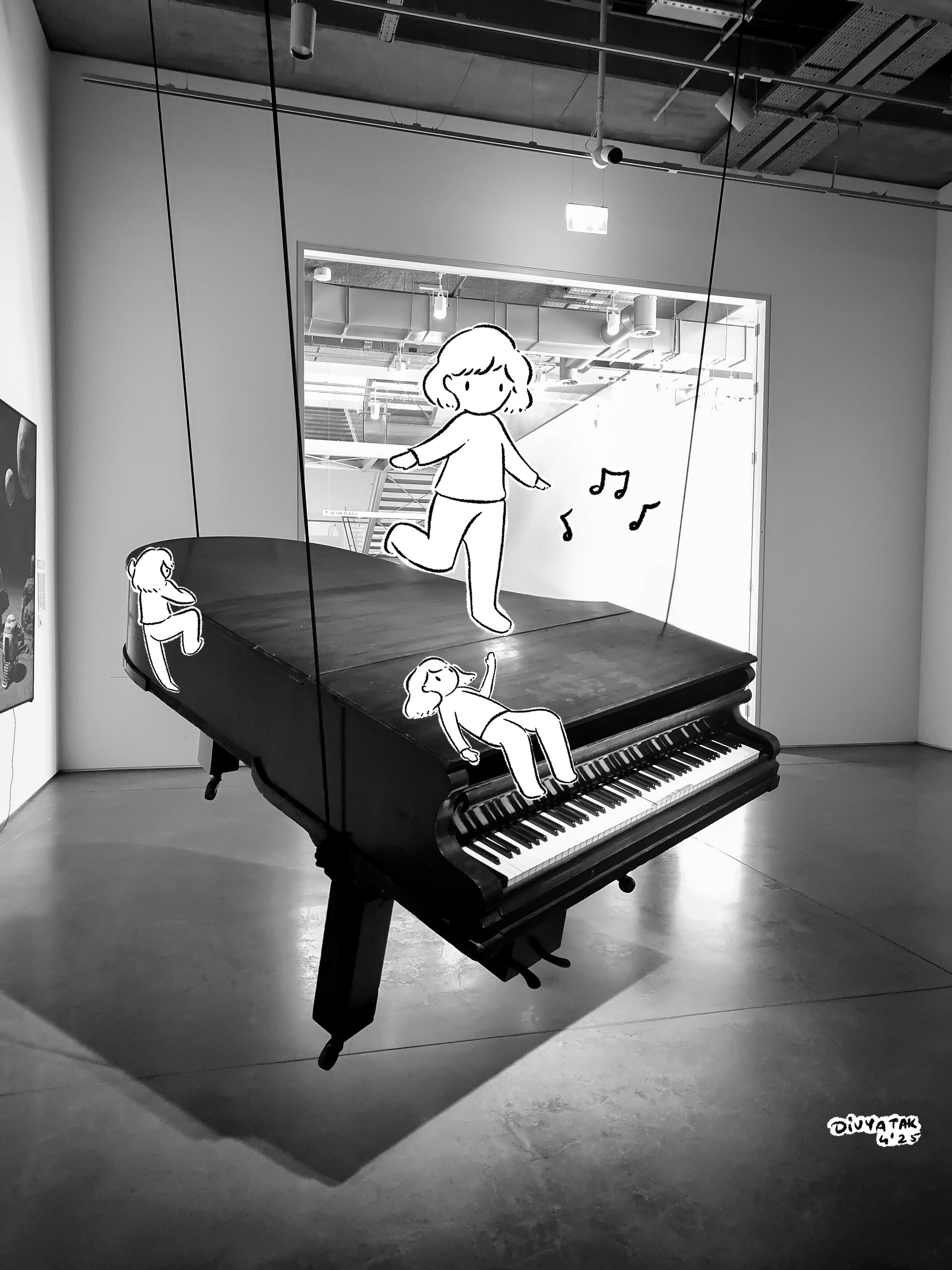
While I was on the shoot, the always awesome Varun helped me brainstorm visual refinement on my photo comics, and I love this new “Sticker” look to them.
Also! Did you know I have a podcast? One that is a video podcast in the recent season? Check it out here!